Laser Cutting Polycarbonate: A Clean Cut Even Where the Material Would Normally Turn Black
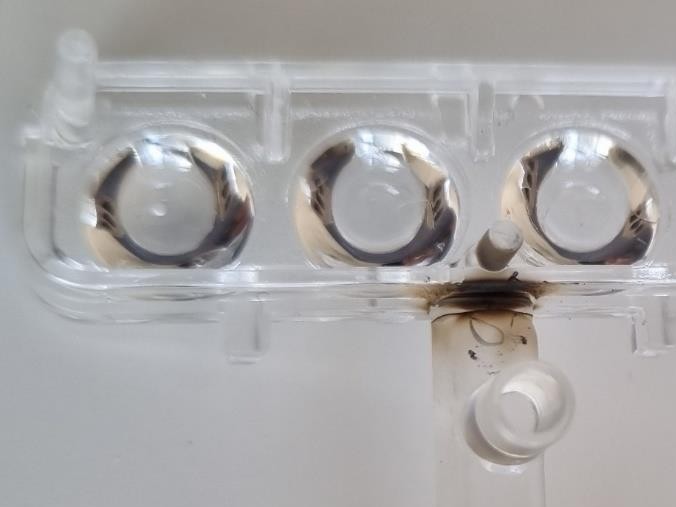
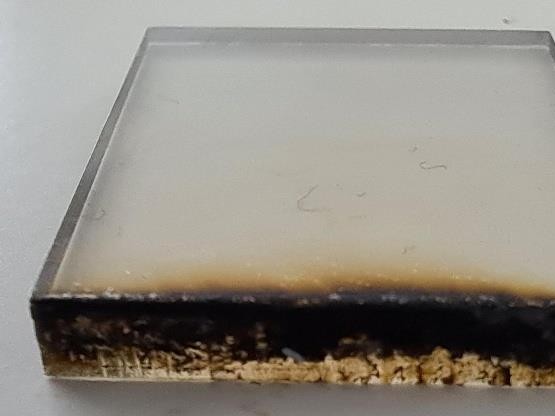
Clear polycarbonate is one of the more challenging materials when it comes to achieving a high-quality laser cut. With an unsuitable technology or process parameters, the cut edge can easily turn yellow or brown and even carbonize, which is particularly problematic for optically sensitive components.
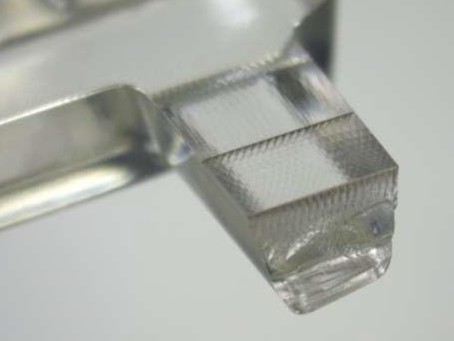
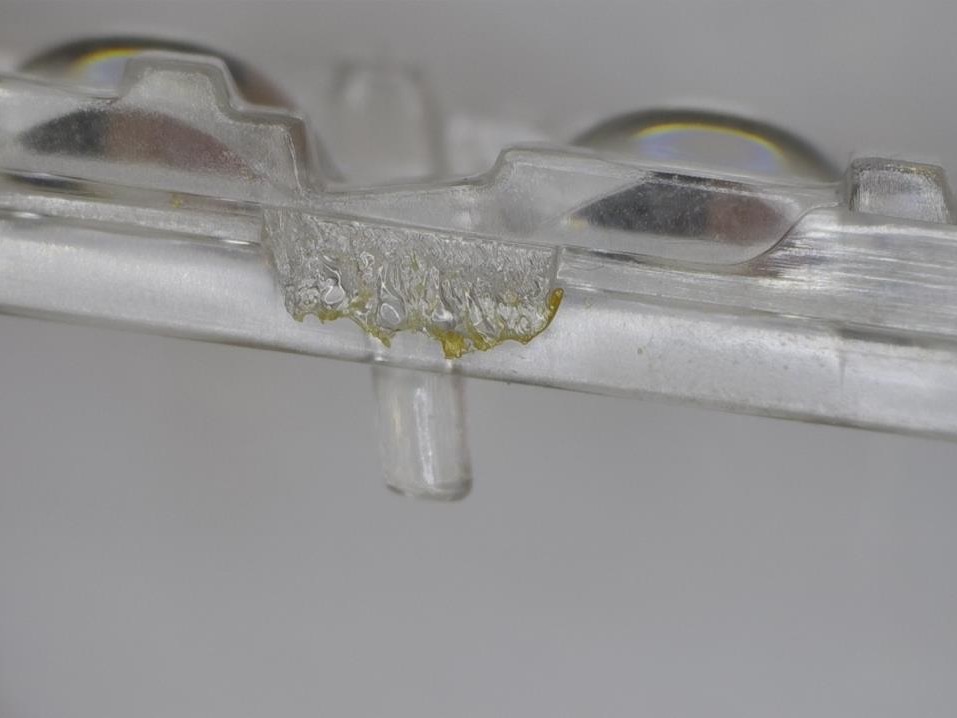
We have been working on this challenge for a long time and have tested several laser technologies at its application center using both test samples and actual injection-molded parts. The result? Polycarbonate can be laser cut without visible discoloration or carbonization, with high edge quality and results suitable even for optically sensitive applications. The key is selecting the right technology and mastering the process.
Polycarbonate: An Excellent Material That Is Challenging to Cut
Polycarbonate (PC) is widely used because of its high toughness, impact resistance and excellent transparency. It can be found in lenses and light guides, headlamp covers, protective covers, medical devices and electronics. These applications place particularly high demands on cut quality: the edge needs to remain clean, free from discoloration and cracks, without damaging adjacent functional surfaces.
During laser processing, PC is sensitive to thermal load. An unsuitable laser or incorrect process parameters can lead to yellowing, carbonization or incomplete cutting. This is why some companies abandon laser cutting of polycarbonate after their first unsuccessful trials and continue using mechanical methods instead.
Why Cut Polycarbonate with a Laser?
Mechanical processing of PC, such as milling or shearing, is well established but has its limitations. Laser cutting offers several significant advantages:
- Contactless processing
No mechanical force is applied to the part, eliminating the mechanical stress associated with machining and reducing the risk of mechanically induced microcracks, which are a known cause of subsequent cracking in PC. Fixturing requirements for thin-walled or geometrically complex parts can therefore be significantly reduced.
- No chips or tool wear
The process is clean, making it suitable even for sensitive production environments, and cut quality does not deteriorate over time as it can when a milling tool gradually loses its sharpness.
- Precision and design flexibility
A laser can handle small radii, narrow slots and cuts in difficult-to-access areas, for example when removing gates close to optically active surfaces.
- Easy automation
The laser can be integrated with a robot or into an automated production line. Changing the geometry is a matter of modifying the program rather than manufacturing a new tool or fixture.
- Fewer finishing operations
With a properly controlled process, deburring and time-consuming edge finishing can be eliminated.
Not Every Laser Is Suitable
As part of its long-term development work, LASCAM compared several types of laser sources and cutting methods. The tests confirmed significant differences in the results. While some technologies caused the material to turn yellow or even black in the cutting area, others were able to cut polycarbonate without visible thermal damage or carbonization.
For complex injection-molded parts, a robotic workstation with a fixed cutting head also proved effective.
Conversely, some lasers that perform very well in plastic marking and engraving are not suitable for cutting polycarbonate. This is an important consideration for anyone evaluating an investment in laser technology.
The Right Technology Depends on the Application
There is no universal solution for all polycarbonate parts. A flat sheet requiring an optically perfect edge has different requirements from an injection-molded 3D component where the priority is reliable and fast gate removal without the risk of damaging functional surfaces. The choice of technology depends on:
- required edge quality and appearance,
- geometry and accessibility of the cutting area,
- material thickness, surface finish, additives and surface condition,
- required productivity and level of automation,
- investment and operating costs.
This is where experience from real-world testing becomes essential. It enables LASCAM to recommend a technology that will work on the customer’s specific part – not just on paper.